The Defeated: The Aesthetics of Resistance 2026
26 aug → 8 nov 2026
Participating artists: Zbyněk Baladrán, Chiara Bugatti, Ali Cherri, Öyvind Fahlström, Harun Farocki, Jean-Luc Godard, Ane Hjort Guttu, Hamedine Kane, Kateryna Lysovenko, Asier Mendizabal, Peter Nestler, Daniela Ortiz, Valerie Osouf, Gunilla Palmstierna Weiss, Christoffer Paues, Samuel Richter, Lenke Rothman, Lina Selander, Peter Weiss.
What could an aesthetics of resistance be today? This exhibition borrows its title from two books by the Swedish-German author, artist, filmmaker and playwright Peter Weiss (1916–1982): The Defeated (De besegrade), written in Swedish and published by the Bonniers publishing house in 1948, and The Aesthetics of Resistance, written in German and published in three volumes between 1975 and 1981.
The monumental novel The Aesthetics of Resistance depicts the struggle against fascism in some European countries in the years leading up to and during the Second World War. In its vast waking dream, historical characters coexist with mythological beings, artistic hallucinations confront documents of barbarism, clandestine resistance networks associate with exiled cultural leagues. The book argues that it is by “taking on” art and culture that an effective resistance to the forces of fascism – and to the forces that produce fascism – can take shape, that a new we can be created, capable of constructing a future beyond the devastations wrought by fascism.
From its own perspective, its own time, the book insists that the history of resistance to fascism – the history of these gatherings, efforts, and struggles – must also still be our history, in the present of reading. The exhibition asks: what could this idea mean today, in the autumn of 2026? How might the vision of a resistance to fascism, and of an experimentation with new forms of community, which would also take the form of a critical appropriation of the histories of art and culture – how could such a vision be translated into practice in the contemporary situation, in which a new far right and new fascisms are gathering force? What shapes might such an endeavor assume under present conditions, facing the constraints and the possibilities of our time?
The Defeated: The Aesthetics of Resistance 2026 is a group exhibition. Artists from different parts of the world have been invited to create new works, responding in different ways to the novel’s challenge. Some address it directly or evoke other works by Peter Weiss and Gunilla Palmstierna-Weiss (1928–2022), others relate to it in more indirect ways, by working with forms, techniques, histories, or problems that can be clearly associated with The Aesthetics of Resistance. The exhibition also has a retrospective dimension. Alongside the newly commissioned works there is a selection of artworks and documents by Peter Weiss and Gunilla Palmstierna-Weiss, as well as by people in their circles. The historical works create new conditions for approaching the contemporary ones and for situating them in a critical, historical space; the contemporary works cast new light on the historical ones, and on the struggles, projects and ideals that they leave as their legacy. In this way the composition of the exhibition reflects the novel’s multiplicity of voices, its polyphonous history and its kaleidoscopic world image.
Here, the novel The Defeated is an important reference. It provides a site-specific starting point for the exhibition’s questions and composition of parts. It opens a path to approaching The Aesthetics of Resistance in its social, cultural and institutional reality: how did Weiss arrive at the specific artistic form and aesthetico-political position of The Aesthetics of Resistance, from the position of The Defeated? The exhibition traces this development in several steps, in relation to Peter Weiss and Gunilla Palmstierna-Weiss’s artistic productions and political commitments.
The Defeated evoked an inferno, the world of ruins that Weiss encountered when he visited his former homeland Germany after the end of the Second World War. And yet Germany’s social and cultural reality remains largely absent from the 1948 novel. Instead, it is written in a style drawing on surrealism, where the historically specific is abstracted in favour of what Weiss would later call a “magically evasive” language, with archetypal figures, mythical shadow worlds and symbol-heavy dream beings. It is with the documentary montage of The Aesthetics of Resistance that this period in German history is first given a literary account, that the “names of the evil spirits” are first spoken, in Weiss’s work. The distance between The Defeated and The Aesthetics of Resistance indicates the difference between a dream of sleep and a waking dream.
Between these two books, Peter Weiss made his way as an artist shifting between artforms and media. He was a painter, a collagist, a filmmaker with social concerns and a taste for the experimental, before finally gaining success as a playwright in the early 1960s. His early years were marked by the rise of fascism and the experience of exile. His paintings depicted apocalyptic world landscapes while he saw the artist as a melancholic, detached observer. A transformative visit to Auschwitz in 1964 contributed to his decision to “come out of his hiding place” and devote his work – now mainly theatre – to promote peace and condemn the intricate financial and political relationships that kept the world under imperialist oppression.
During the 1960s, he envisioned that his different plays – about the trials against the Nazis and the anticolonial liberation movements in countries such as Vietnam, Cuba and Angola – would be the parts of a gigantic mega-play titled Theatrum Mundi, a world theatre that would represent the totality of all liberation struggles of his time. In a sense, he pursued that impossible project with The Aesthetics of Resistance, where the multitude of historical details and the great montage of artistic and cultural references coexist in an ever-present continuum, in which the resistances of the past seek a new unity with the conflicts and the communities of today.
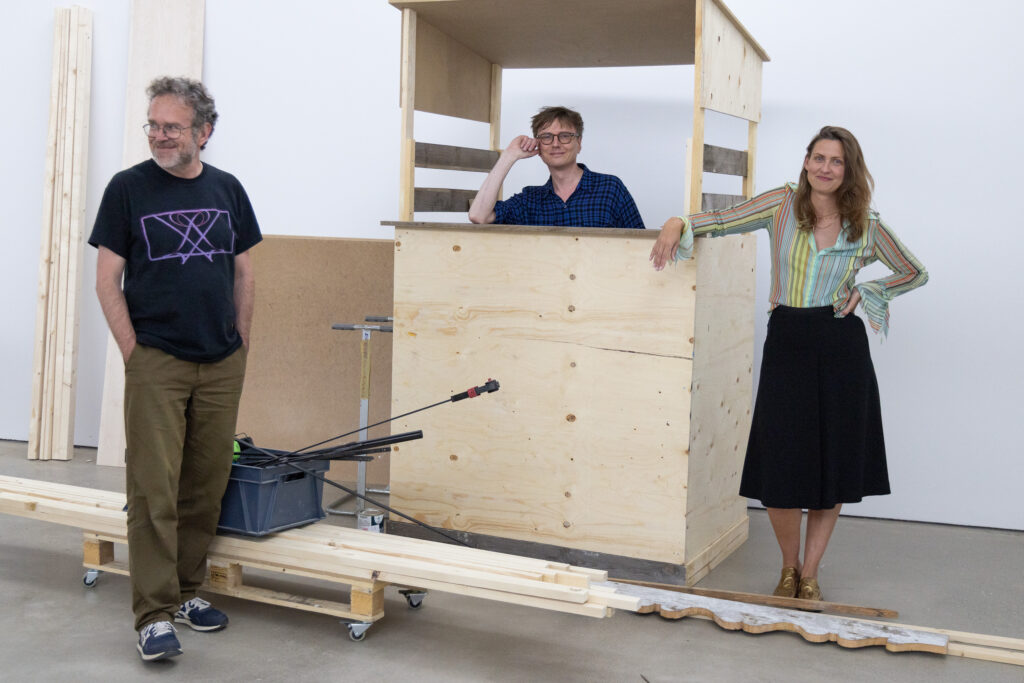
Curators: Kim West (researcher and critic. Stockholm); François Piron (curator, Paris); and Joanna Nordin Asp (Artistic Director Bonniers Konsthall).
Publication: The Defeated: The Aesthetics of Resistance 2026
This book, which features previously unavailable texts by Peter Weiss and Gunilla Palmstierna-Weiss, as well as newly written contributions by prominent Weiss scholars and leading international critics and intellectuals, is an extended part of the exhibition. From different positions and with different approaches, the texts in the book address the same problems as the artworks in the exhibition do. They are additional elements in the exhibition’s montage, extending its experiments in new directions. Here voices from then and now come together, describing and theorizing, reflecting and speculating on the world of The Aesthetics of Resistance, and the histories, artistic forms, and political visions that are at work in it.
Texts by Magnus Bergh, Claudia Firth, Anna Hallberg, Esther Leslie, Sven Lütticken, Joanna Nordin Asp, Gunilla Palmstierna-Weiss, Jacques Rancière, Werner Schmidt, Gustav Strandberg, Alberto Toscano, Peter Weiss and Kim West.
With support from Swedish Academy, OCA Office for Contemporary Art Norway, AC/E Acción Cultural Española:


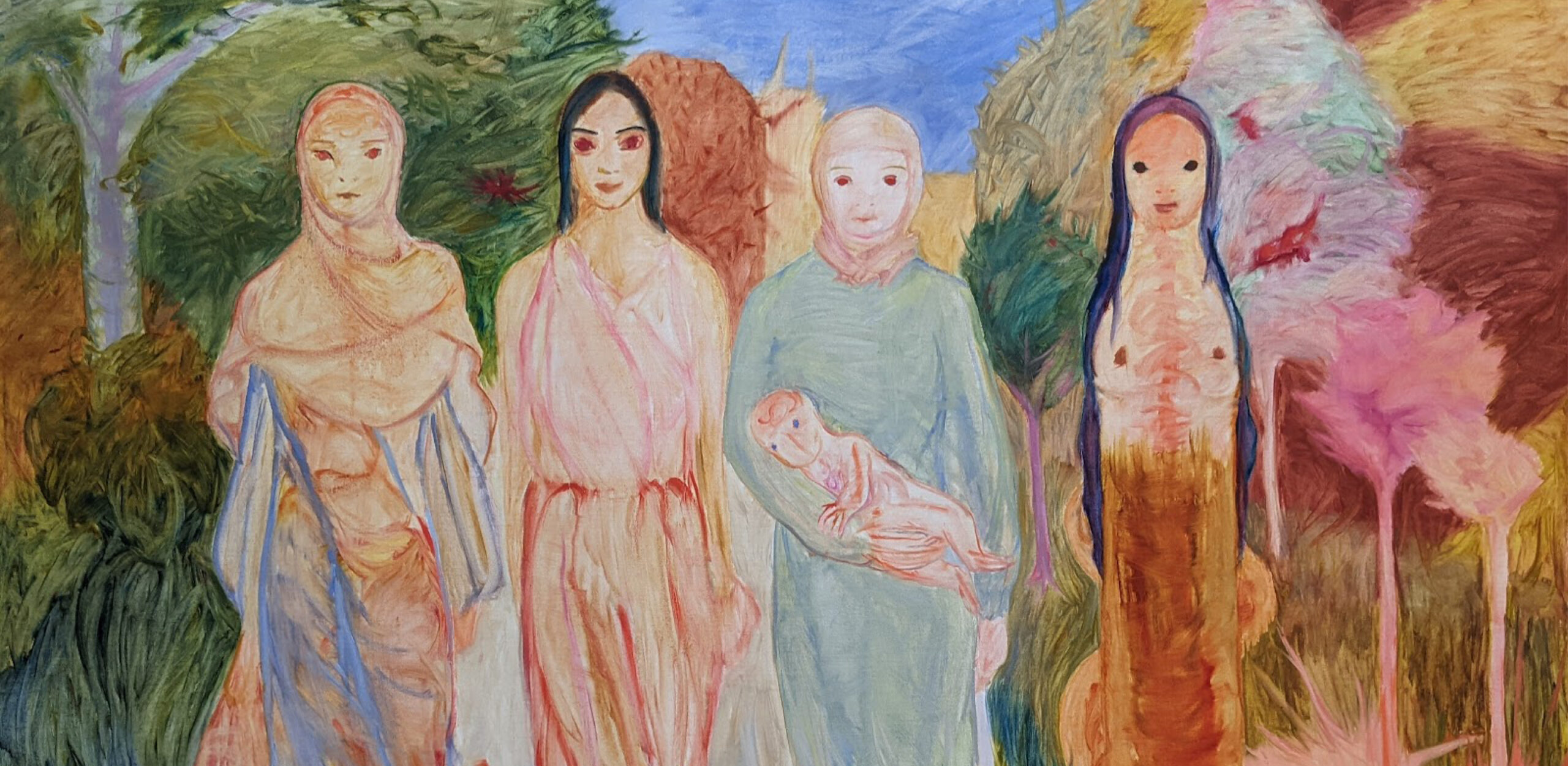
Image: Kateryna Lysovenko, To be in Vienna, seeing people from other wars, 2025.