A Conversation with Torbjørn Rødland
Torbjørn Rødland (TR) in a conversation with the curator Magnus af Petersens (MAP).
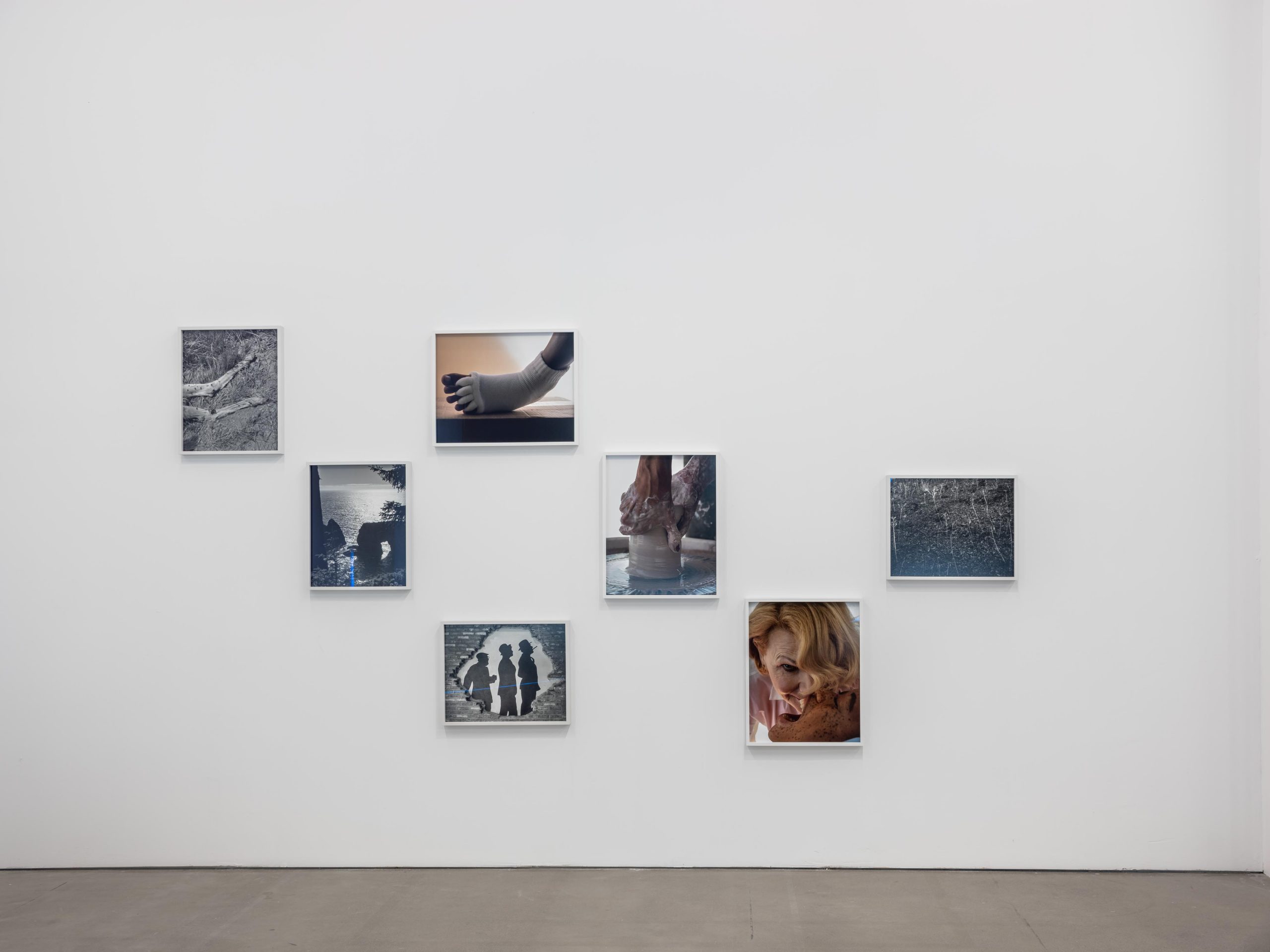
MAP: Many of your photographs seem to be as much about tactility as about visuality. There are many liquids, sticky substances, and hands with fingertips that touch and feel, as if trying to grasp the realness of something that, for us as viewers, is an image. Can photographs build bridges between the senses?
TR: I don’t understand why they couldn’t! In order to move beyond the limitations of endless subjectivity, critical postmodern art reduced complex phenomena to a study of cultural forms and language. Everything became political. In response to this analysis, I take a more integrated or inclusive approach. I’m not only interested in how images are read but also in their magic and how they make us feel, how they move us. Even if photography often begins as observation, my dream is a more deepened engagement. I am an observer who longs for intimacy. But to return to your question: even without synaesthesia, the five senses are interconnected and unified from birth.
MAP: Yes, the images are both touching and about touch. Is there a conflict that you set in motion between the immediacy of touch, the experience of being touched, and the awareness of it—a distance to the feeling itself?
TR: I think I want you to feel a conflict while experiencing a photograph that overcomes that conflict—at least in most images, though not all. Opposites need each other, but what is the result of a contradictory union? Hopefully something layered, and therefore true. Yes, there is a balance between distance and immersion, or emotionality. For me, the movement leans toward emotionality, but this is largely based on personality and may look different for other viewers.
MAP: The new works that make up the majority of the exhibition Fifth Honeymoon revolve around the theme of marriage, or perhaps romance, travel, rituals. A ritual is something repeated, given symbolic meaning, but what that meaning is often becomes forgotten or lost. The photographs in this series do not illustrate the subject in any obvious way—can you describe your approach to the theme, or the relationship between the title and the works in the exhibition?
TR: The title was helpful in the final editing process—when I was deciding what to leave out—but it did not exist before the images. I usually do not determine themes, ideas, or symbols in advance. Either they emerge from the material or they don’t. I’m not a conceptual artist in that sense, but I do enjoy having a title that is open to interpretation. Aside from the contradictory unions we’ve touched on and the aspects you mention, Fifth Honeymoon might make you think of sticky substances applied to a range of classical forms. I think it also points to something that has come up several times. It’s time to treat photography as an old medium.
MAP: When you say that opposites need each other, I immediately think of the photograph of an older woman and a girl, or young woman, embracing: In the Garden—it’s a lovely image. The older and younger woman have an air of innocence. Other images of the young and the old are more charged with conflict, for example Midlife Dilemma, or perhaps The Ring (I say “perhaps” because the images are ambivalent; what we see could be either playful or malevolent). Can you say something about why there seem to be fewer middle-aged people in your photographs?
TR: You mention Midlife Dilemma. For me, this image is about middle age—hence the title. Perhaps middle-aged people contain both the youth they are leaving behind and the old age they are moving toward, and I tend to work with the extreme ends of the spectrum. Perhaps there is something visually strong about that focus on opposites. I am a slave to my medium. Perhaps middle age is less photographable. I don’t know. But I do know that I am drawn to symbolic figures and archetypes. I can make images with middle-aged people if I can get them to represent something beyond themselves and their individual struggles.