The Maria Bonnier Dahlin Foundation Grant Recipients 2025
10 dec 2025 → 8 feb 2026
Bonniers Konsthall is proud to present this year’s Maria Bonnier Dahlin Foundation recipients, Afrang Nordlöf Malekian and Roger Smeby. The Maria Bonnier Dahlin Foundation annually awards grants to young artists to support and promote their work. As part of the grant, an extensive exhibition is presented at Bonniers Konsthall where their works are shown to a large audience, often for the first time.
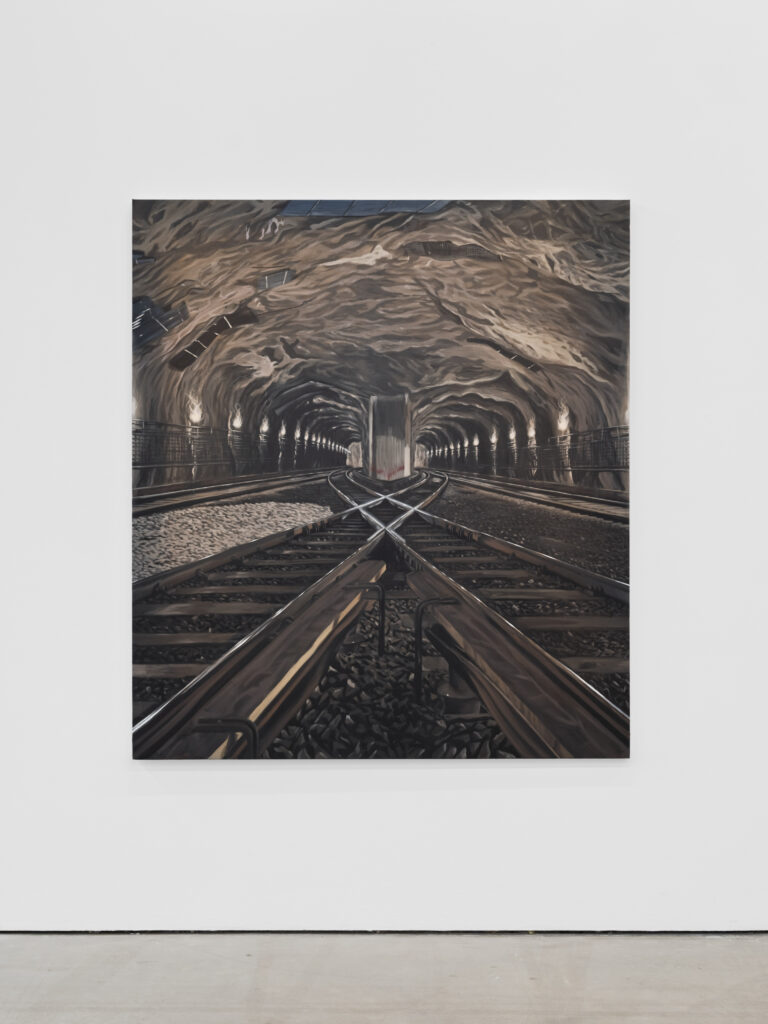
At first glance, this year’s two grant recipients appear to be entirely different from one another, but upon closer examination, one can observe shared elements in their artistic work. Roger Smeby’s paintings are mostly dark, with clearly distinct objects in bold colours – several of the works are inspired by his work in the Stockholm metro. The paintings bear witness to hard physical labour, to earth, stone and metal, often in combination with symbols that refer to existential and spiritual themes. Afrang Nordlöf Malekian’s works are imbued with radiant energy and popular cultural aesthetics, while at the same time addressing serious existential questions about migration, diasporic culture and different power relations. Nordlöf Malekian’s works, in the form of installations and performances, have a political and collective drive and embrace everything from home parties and dance to food and celebrity culture.
Both artists have an energy that is directed towards alternative realities. In different ways, they create new worlds where mythical animals and creatures take centre stage, where old mythological stories come alive and become contemporary again, as they are recreated and transformed by the artists’ respective and entirely unique symbolic languages.
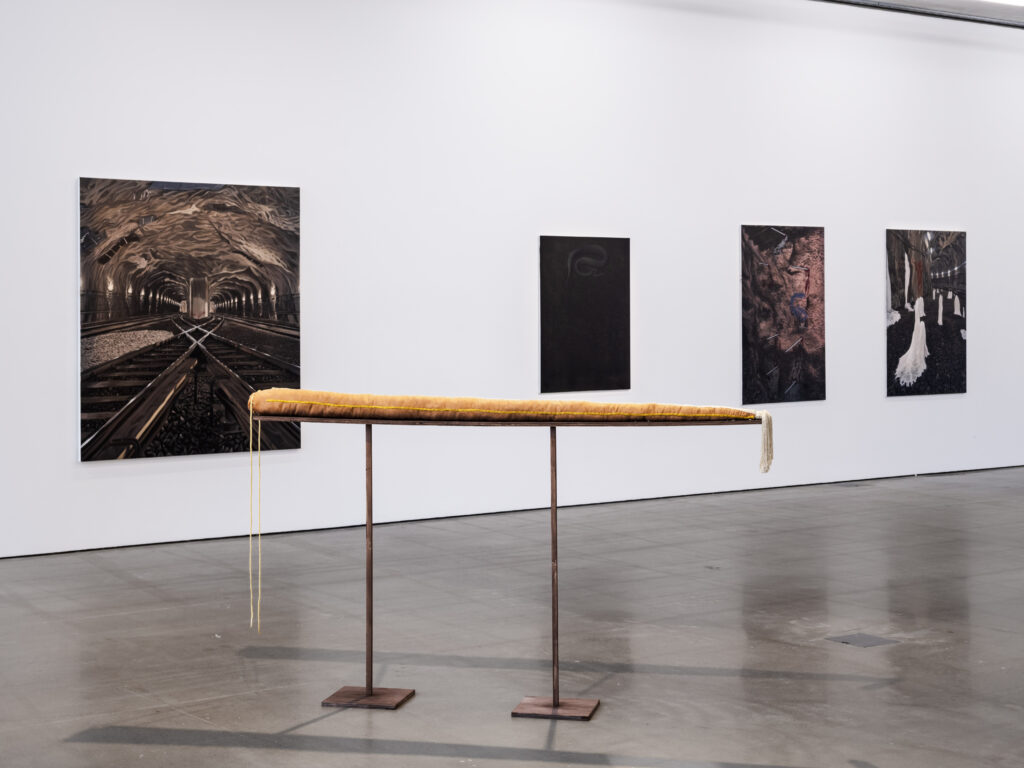
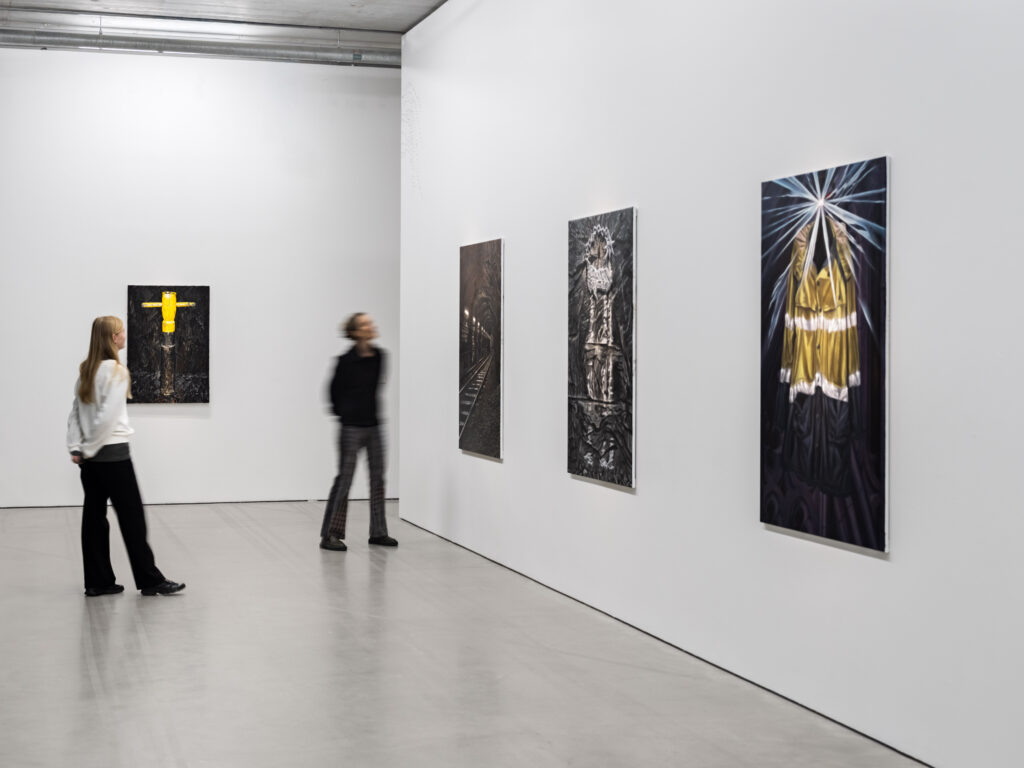
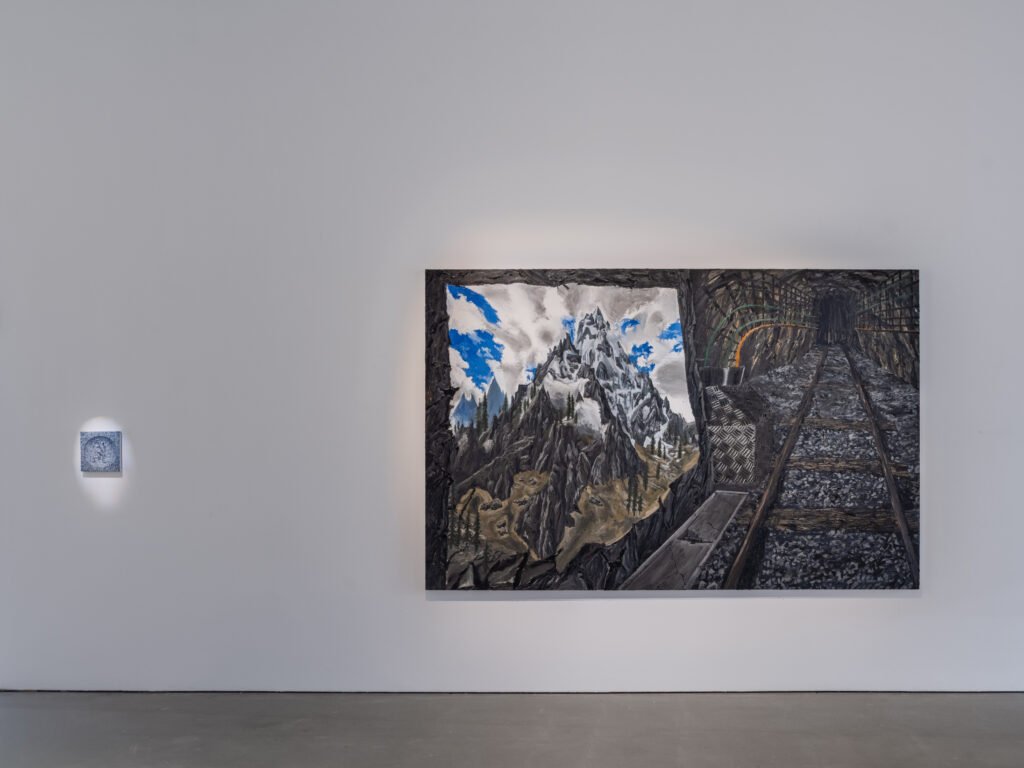
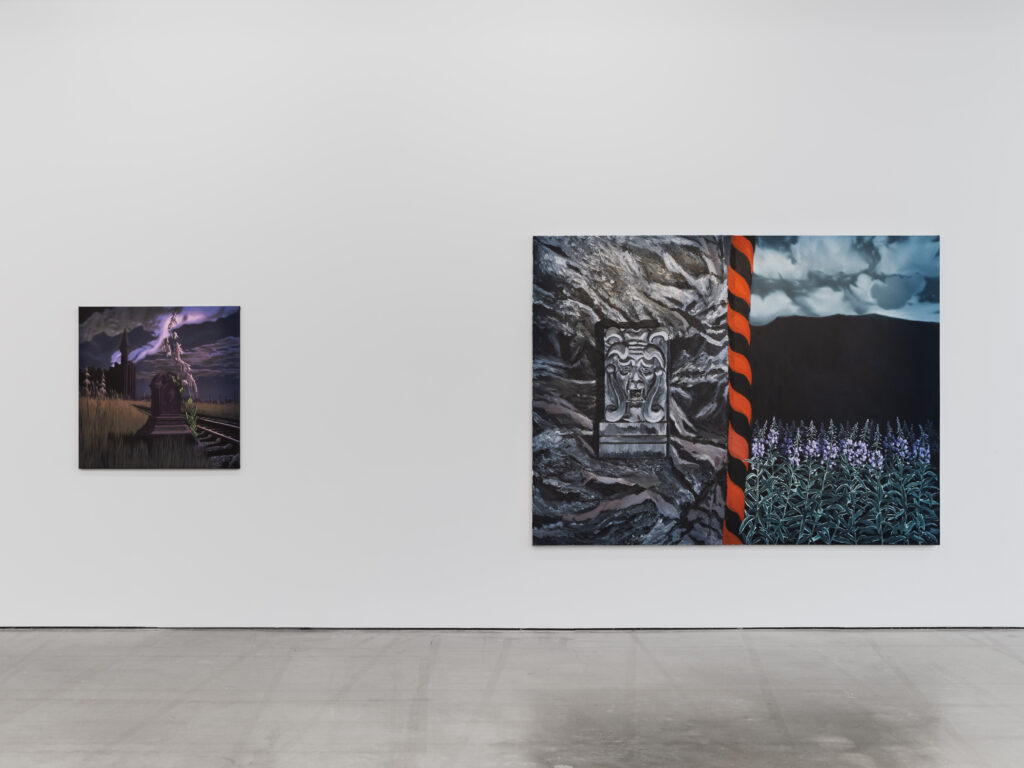
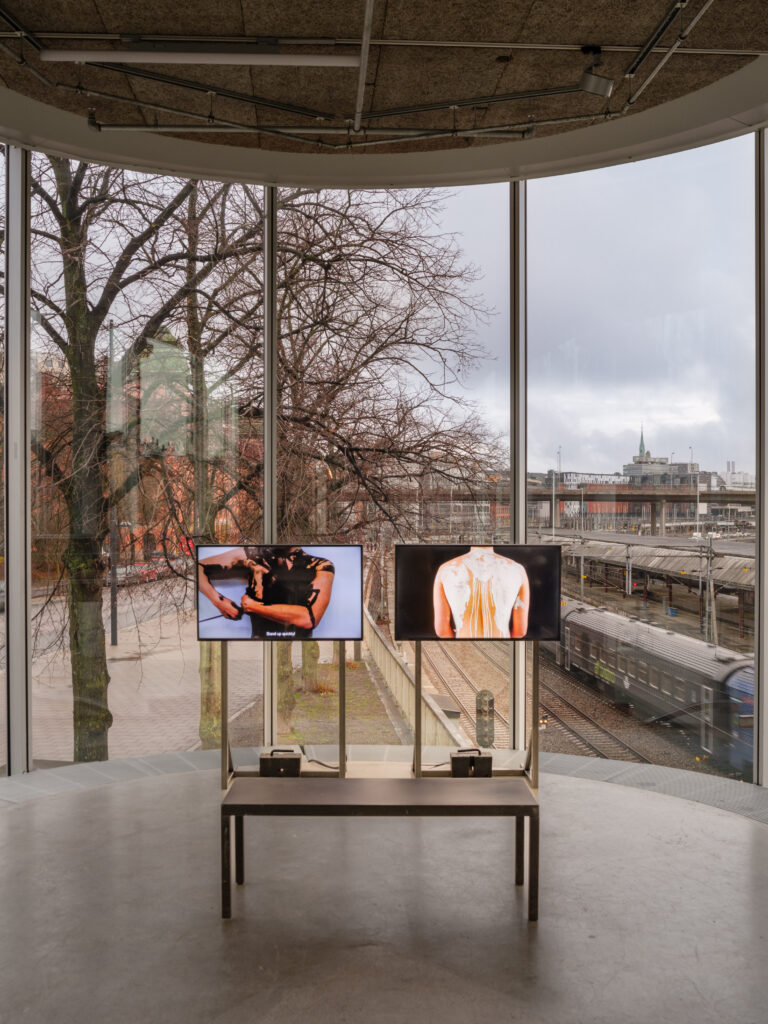
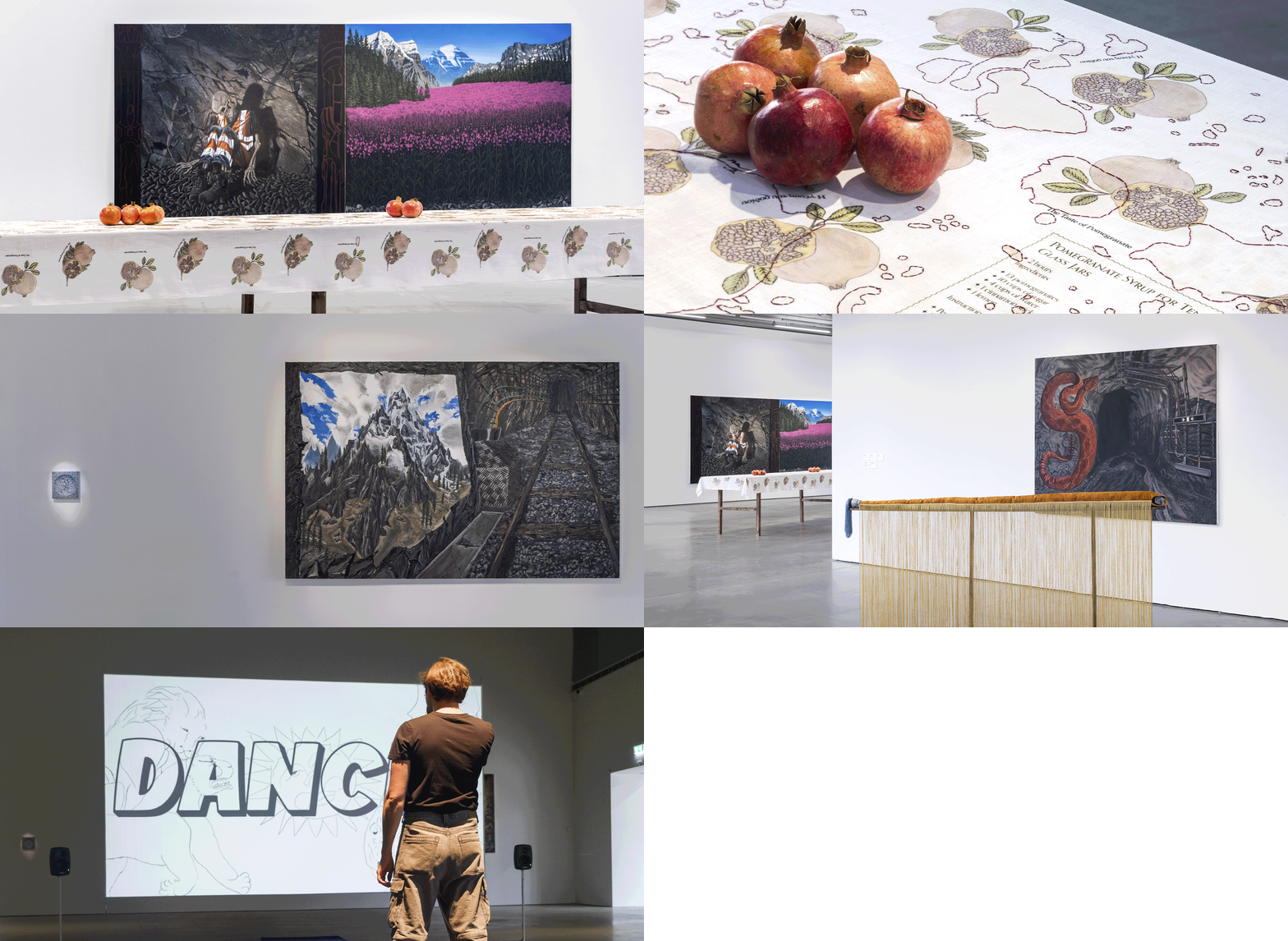
Roger Smeby’s paintings Jungfru (2017), Church (2024), Handskar (2023), Hacka & Skyffel (2024) and Skymning (2025) move towards the world of the train tracks outside Bonniers Konsthall’s windows. The motifs consist of work jackets, work shoes, gloves and tools, functional objects that Smeby recreates in a brilliant sphere of colour, texture and surface. The work is linked to practical equipment, quiet objects that vibrate silently in their own distinct utility values, while moving beyond this functionality and taking on a symbolic character. In the newly produced works Tunnel 17 (2025) and Tunnel 18 (2025), as well as Morningstar (2023), Machete (2024) and Silhouette (2024), we are taken underground and into the tunnels, where familiar landscapes of stone and railway are accompanied by formations that draw us into another world: ghostly figures, a devil figure painted on stone, metal poles brutally protruding from mountains resembling skin or a body. These formations, which Smeby encounters during his work under ground, are transformed in his imagery into something that destabilises the familiar and points to another dimension, somewhere between dream and reality.
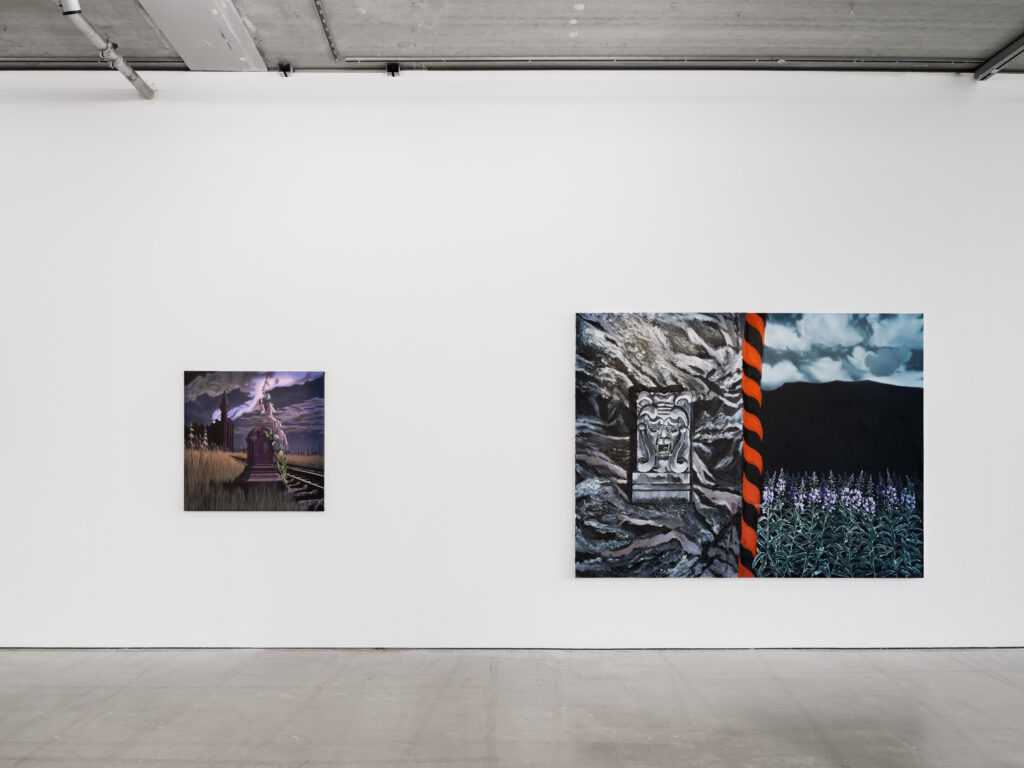
The landscapes in the paintings Deadman (2020), Threnody (2023) and KTG (2018) are a combination of untouched nature, non-areas and non-beings. We are in the kind of wasteland often found around railway lines and in forgotten post-industrial areas. The landscapes seem abandoned, with death present in the midst of the sprawling wilderness. But in these paintings, nature is still the strongest element – the mountain landscapes remain untouched, and colourful flowers spread across the foreground and caress the gravestone.
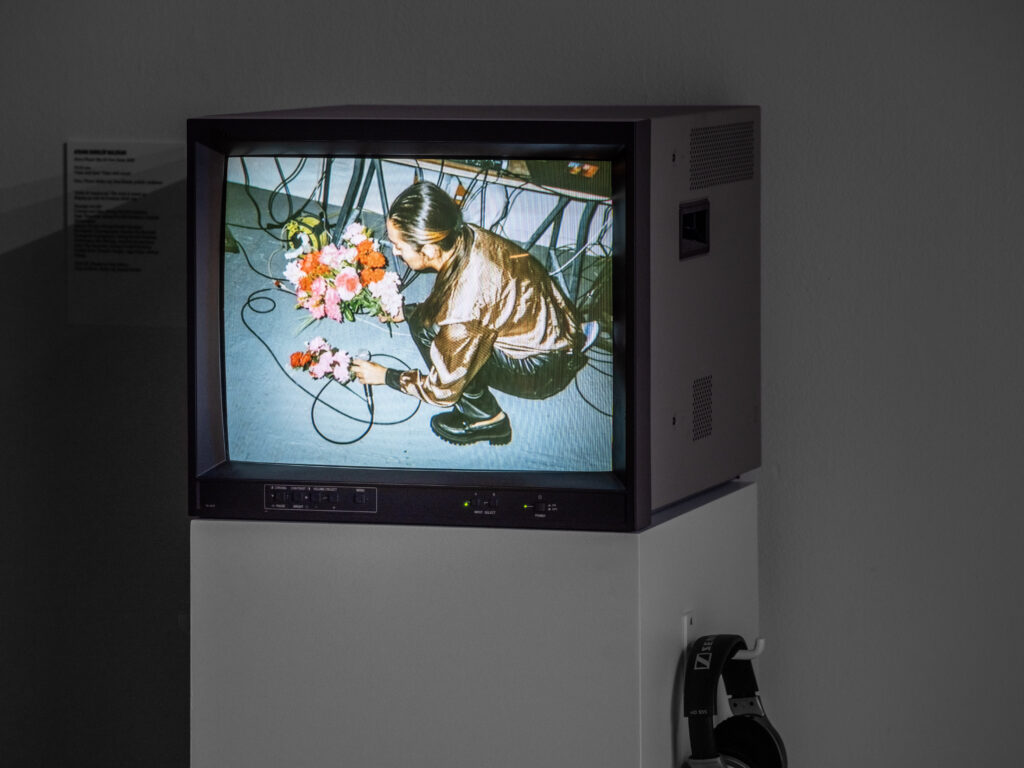
The linen tablecloth in Afrang Nordlöf Malekian and Iliada Charalambous’ work The Taste of Pomegranate (2022–25) was originally part of a participatory performance that took place in different locations: Cairo, Leipzig, Jönköping, Sundsvall, Amsterdam, Utrecht, Malmö and Nova Gorica. Participants around the world used the same tablecloth to peel pomegranates, while the artists read historical and personal stories about this mythical fruit, printed on the cloth. At Bonniers Konsthall, the two artists have created embroideries around the stains, an intricate craft that resembles a map. The table now serves as a monument to what has been shared around this surface, where stories, different languages and recipes are woven together with the mythological, sensory and symbolic value of the pomegranate. The work evokes a complex and fragmented family history, as does Nordlöf Malekian’s video work My Dear Dad Said (2016) and gives us an insight into an early, intimate performance method that Nordlöf Malekian has continued to use in his practice. Here, the artist recounts his father’s unreasonable attitude towards how his son should be. The work reveals the vulnerability of complex family relationships, both for the narrator and the subject of the story.
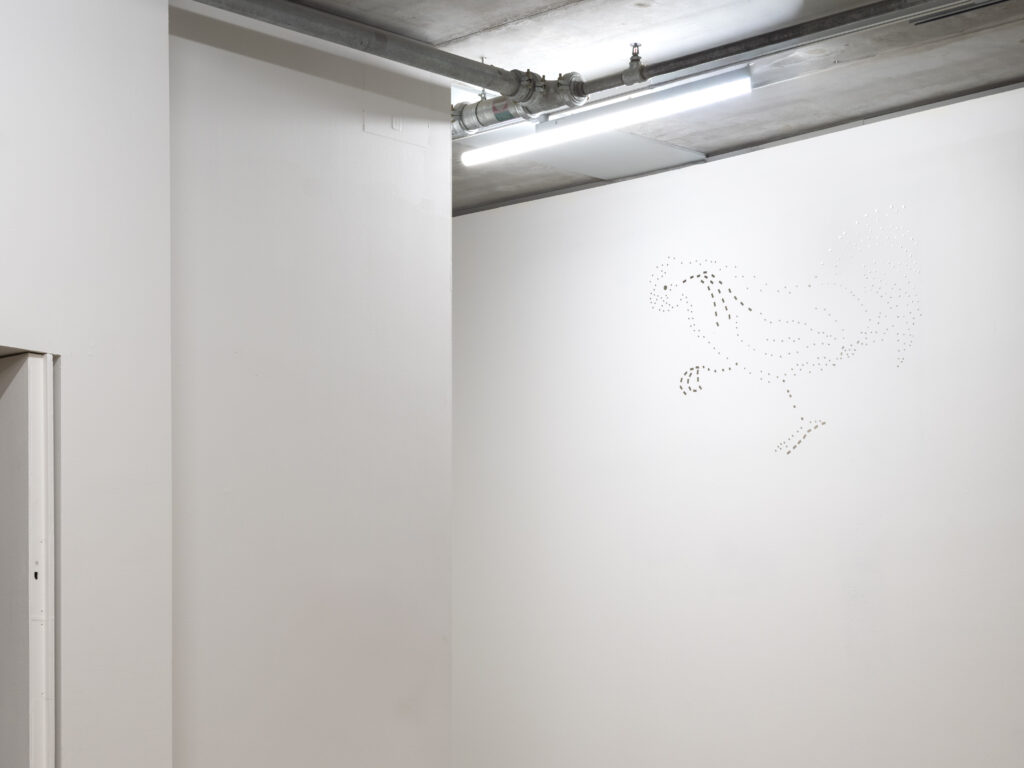
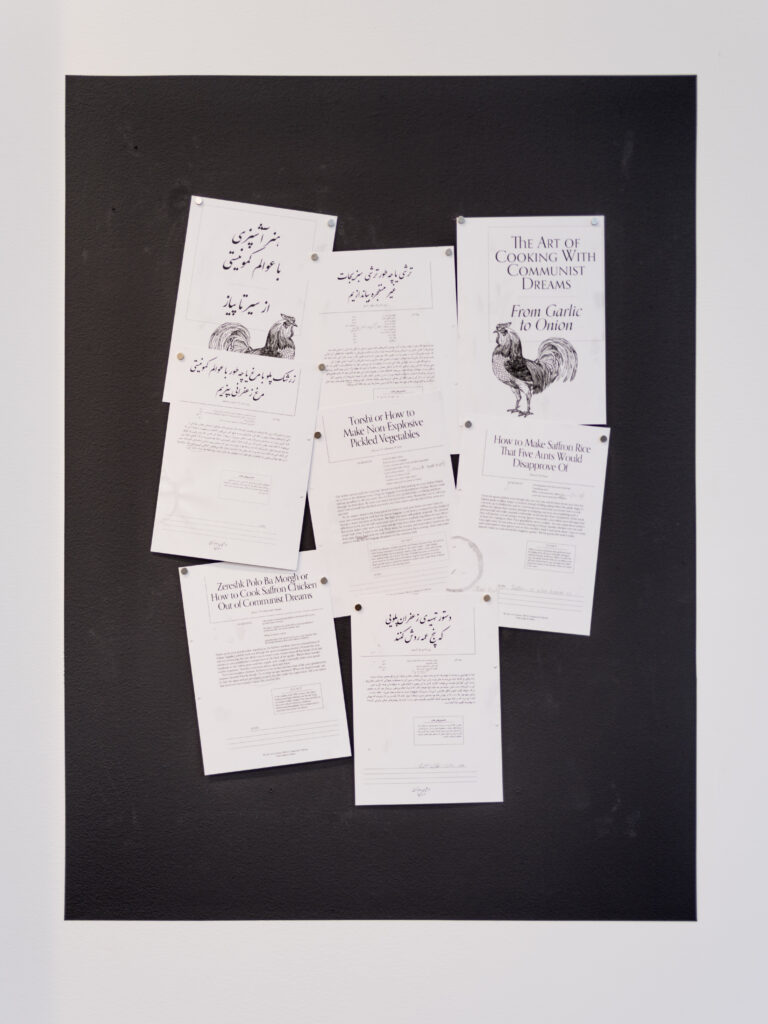
The pomegranate reoccurs in the Greek myth of Persephone, in which she is tricked into eating a number of pomegranate seeds, that then equals the number of months she is forced to spend in the underworld each year. According to the myth, a rooster was her companion in the underworld, and for Nordlöf Malekian, the rooster becomes a trickster character who guides us through the exhibition, while representing new possibilities. The recipes in The Art of Cooking with Communist Dreams – From Garlic to Onion (2021–22), where the rooster reappears, uses a familiar cookbook format to describe how a subversive revolutionary streak has lived on for generations in families of Iranian descent who have been forced to live in exile or silence, not least in the kitchen and amidst the work of women and children.
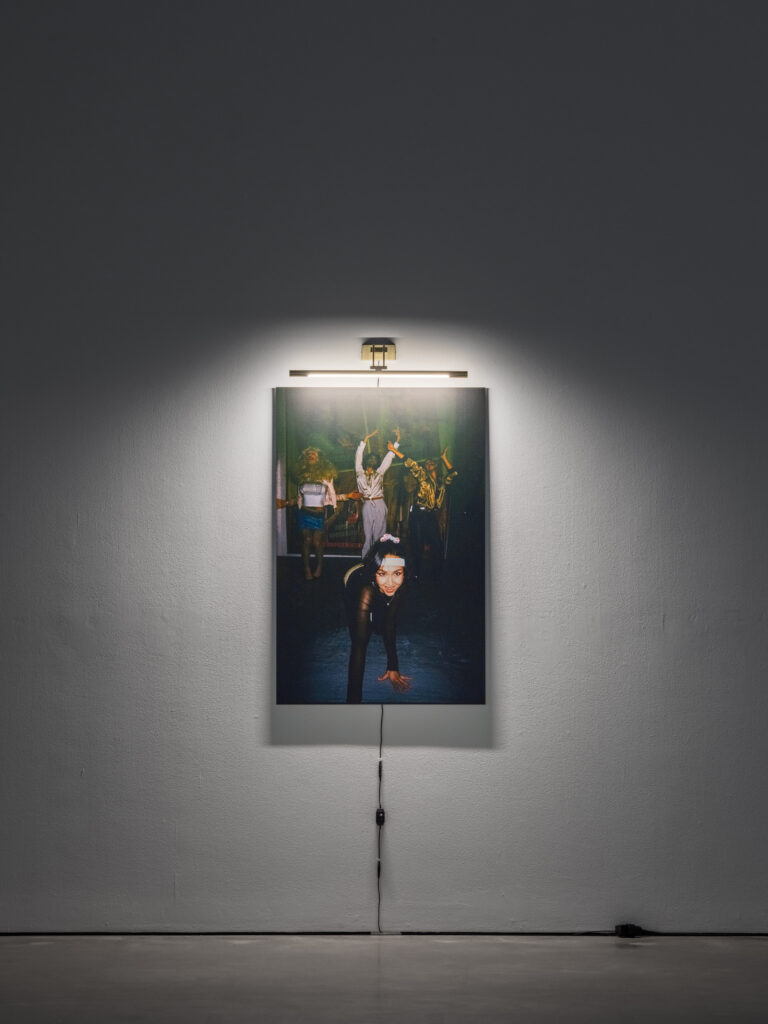
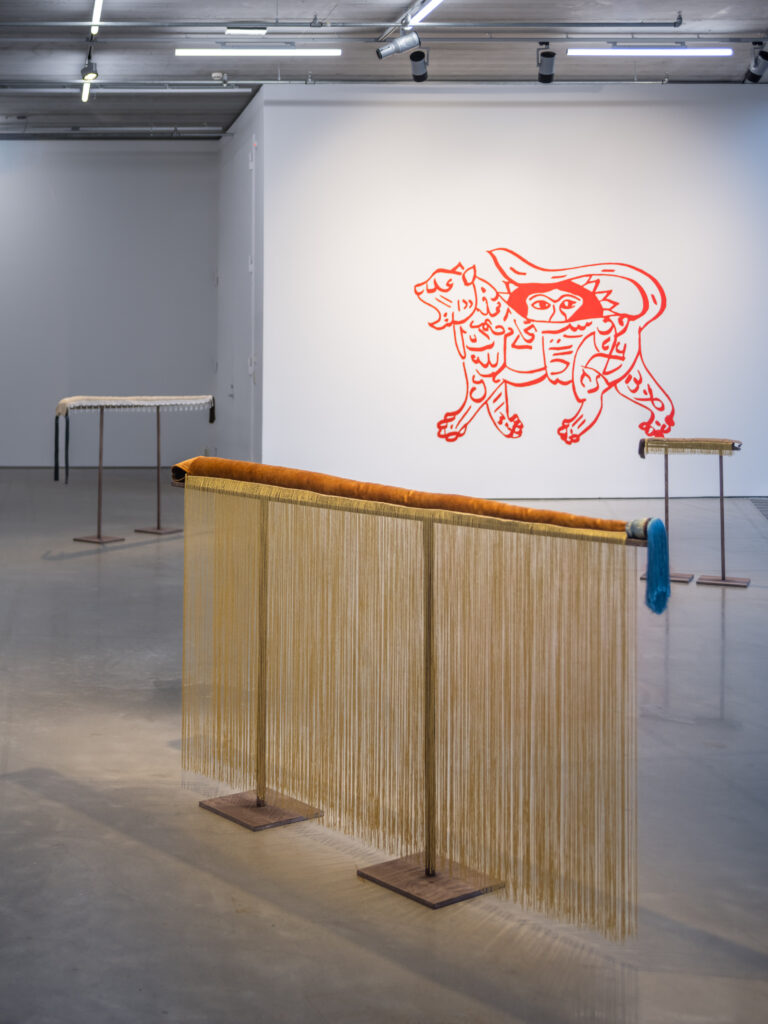
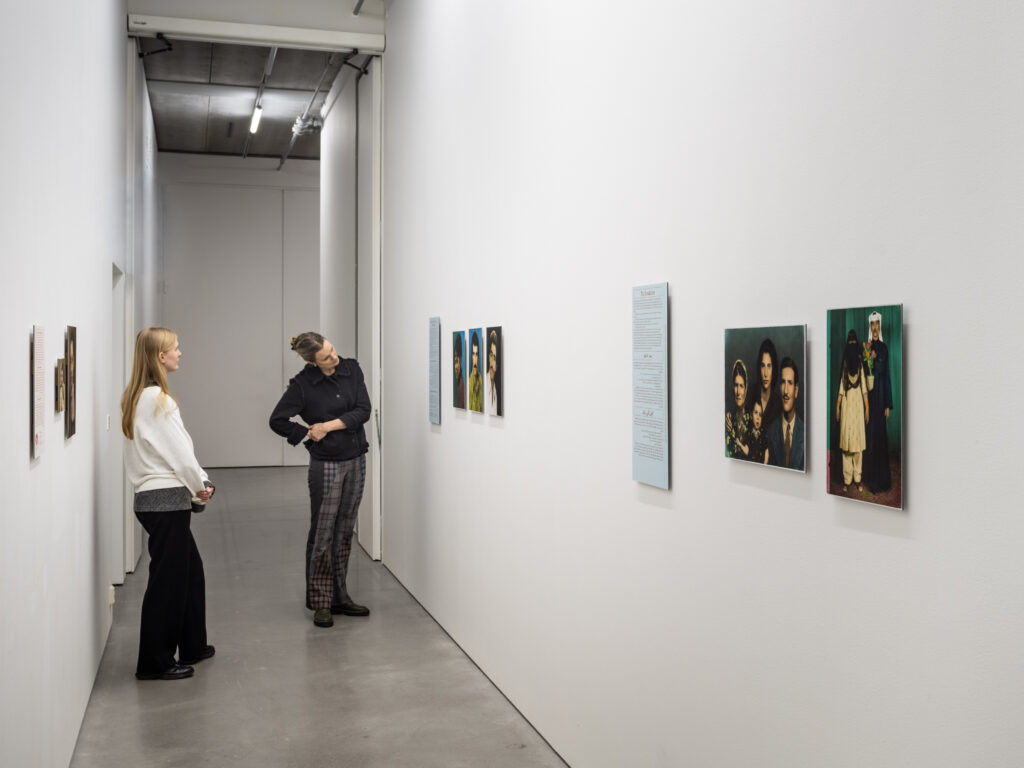
In the newly produced mural Leo’s Tail, Eyebrowed Sun (2025), inspired by mosaic decorations in several mosques and palaces, the lion and the sun together form a powerful expression resembling an emblematic symbol, a coat of arms. In Iranian history, this pairing can be traced back to astrology – the sun in the house of Leo – and has come to symbolise divine authority, royal power and beauty. Originally, the sun was portrayed with beautiful curly hair, a moustache and almond-shaped eyes, but with imperialism, such an ambiguous ideal of beauty could not represent a nation, and the face was eclipsed. After the 1979 revolution, Iran replaced the national emblem; despite this, the lion and the sun remain a strong symbol of Iranian heritage and Iranian nationalism. Nordlöf Malekian revives the sun’s original characteristics and reactivates the lion in several recent works, in which he explores what happens when animals and celestial bodies are given a human face. In the installation A Lion’s Tail (2025), which is also part of a performance, Nordlöf Malekian plays on the lion’s various projected characteristics – rather than toughness and power he focuses on docility, beauty and playfulness. In the portraits that make up The Eclipse of the (Fe)male Sun (2020), taken from the Arab Image Foundation’s archive in Beirut and created in collaboration with art historian Nour Helou, they highlight how the hand-coloured older photographs show non-binary beauty standards, which were later adjusted and limited based on colonial norms. In these works, Nordlöf Malekian uses the symbolic value of the sun and the lion, but reworks the narrative in his own way to be about freedom from dichotomies and oppression, in order to understand what a decolonial expression can be.
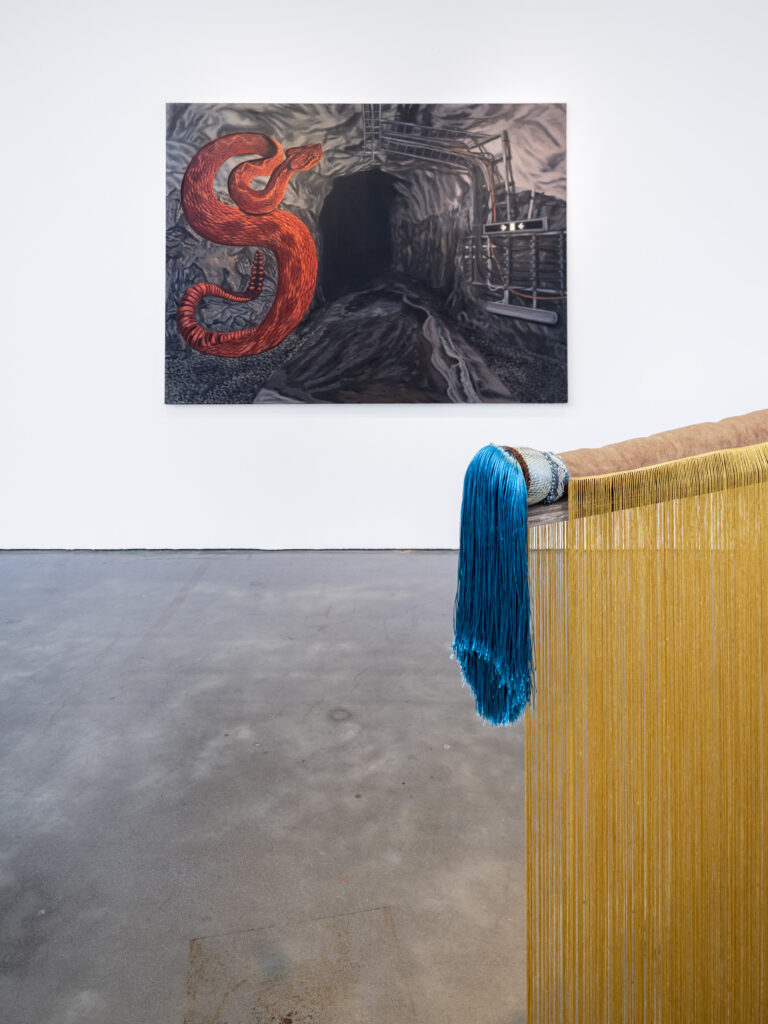
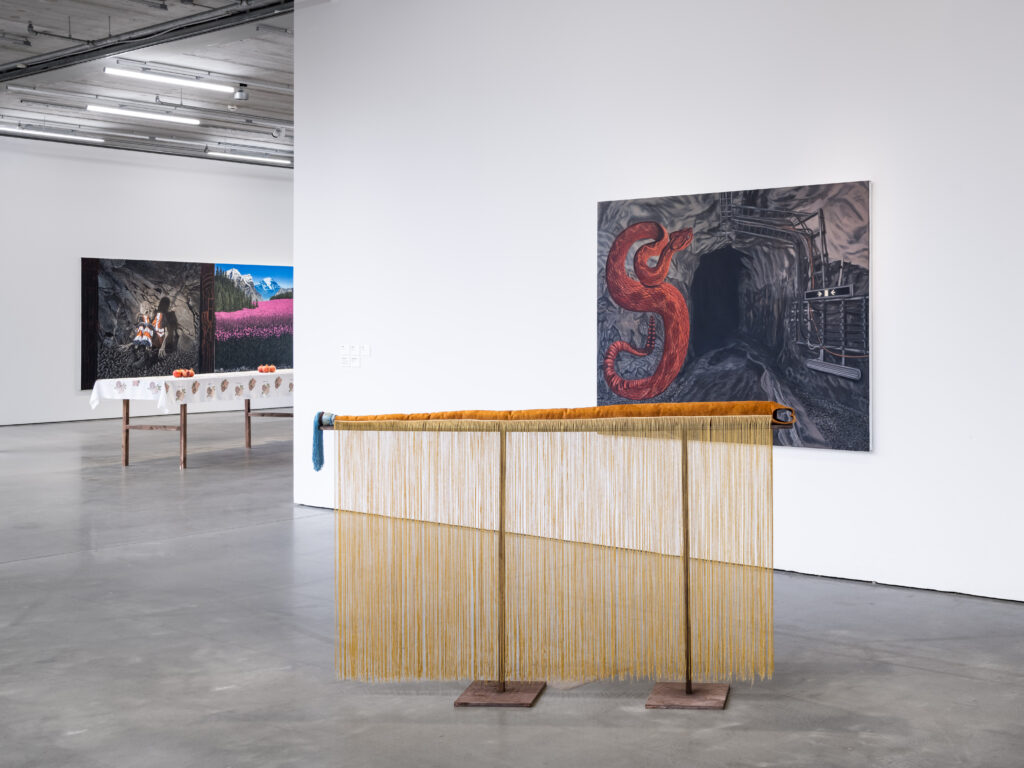
In the same gallery as Nordlöf Malekian’s lion figures, there are paintings in which Smeby uses the tunnel as a portal to another world, a dreamlike place underground where wild and mythological creatures dwell. In Black Hound (2025), the chained wild animal is given Medusa’s hair, and in Wyrm (2024), a well-known underground landscape is haunted by a huge red snake. Different cultures and religions have used the snake as a symbol, representing everything from death and doom to freedom and fertility, rebirth and transformation. Watching over this landscape of powerful, mythical and symbolic creatures is a painting of an owl, Nattuggla (2025), which seems to have been taken from an enchanted forest in childhood fairy tales.
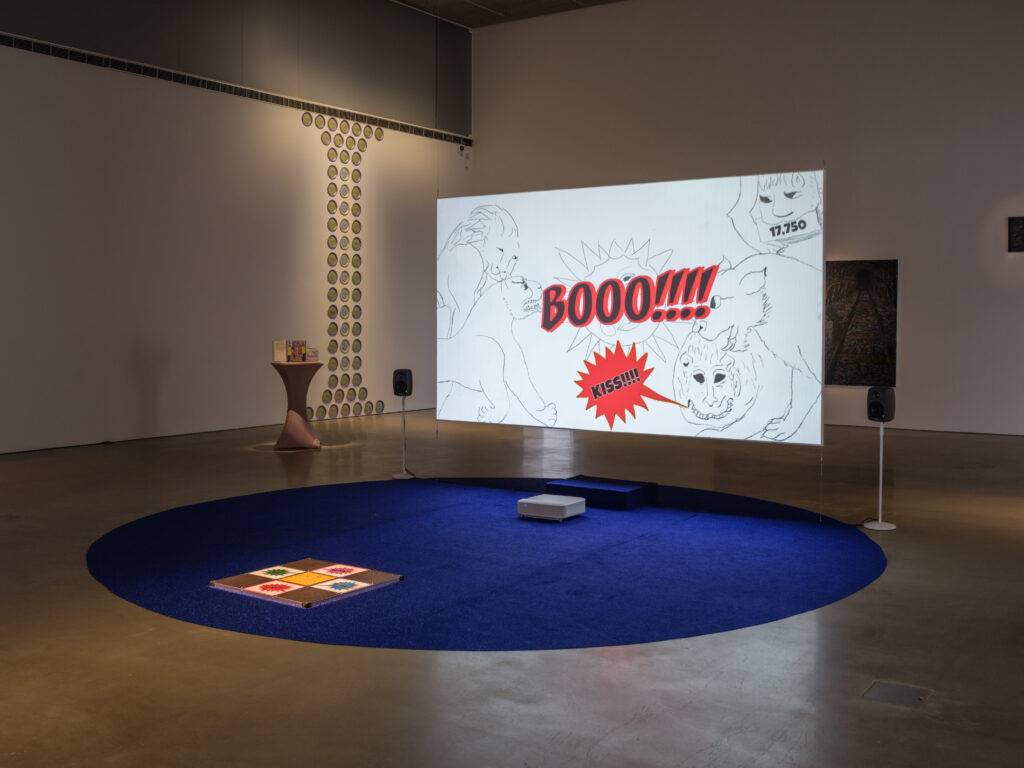
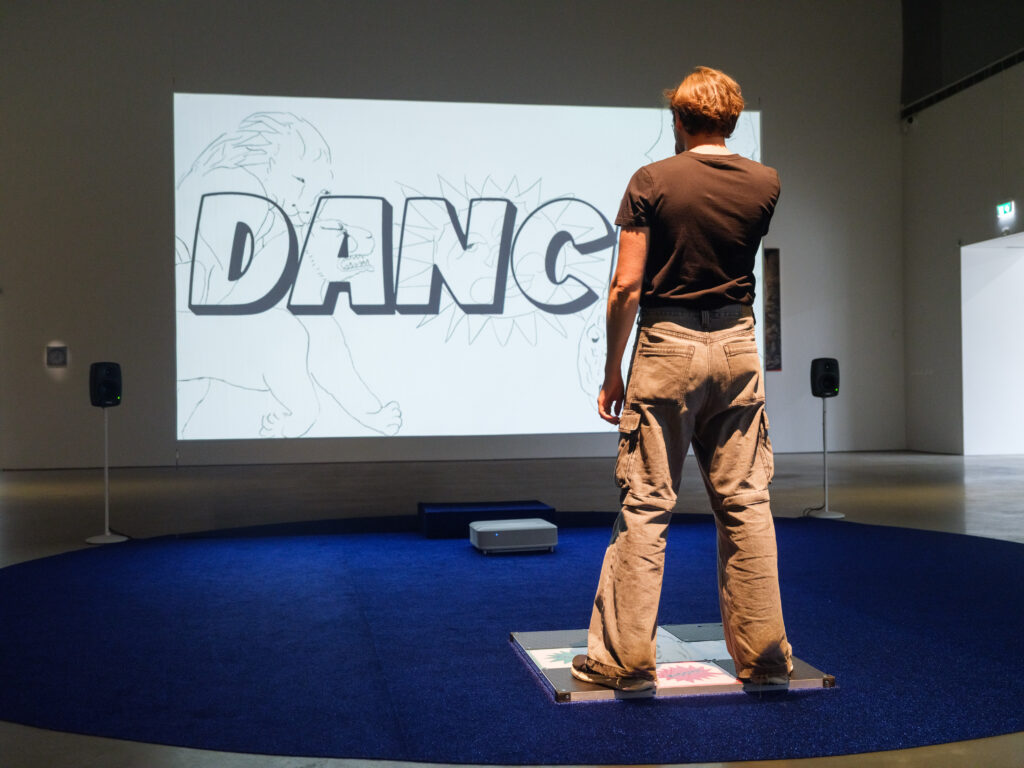
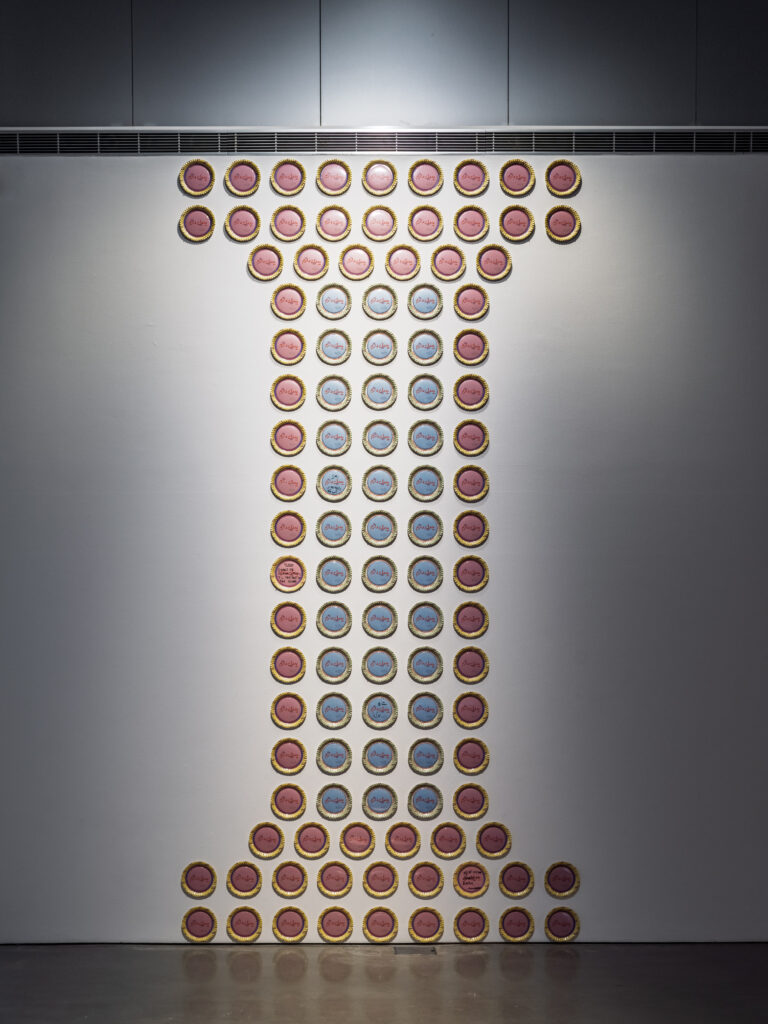
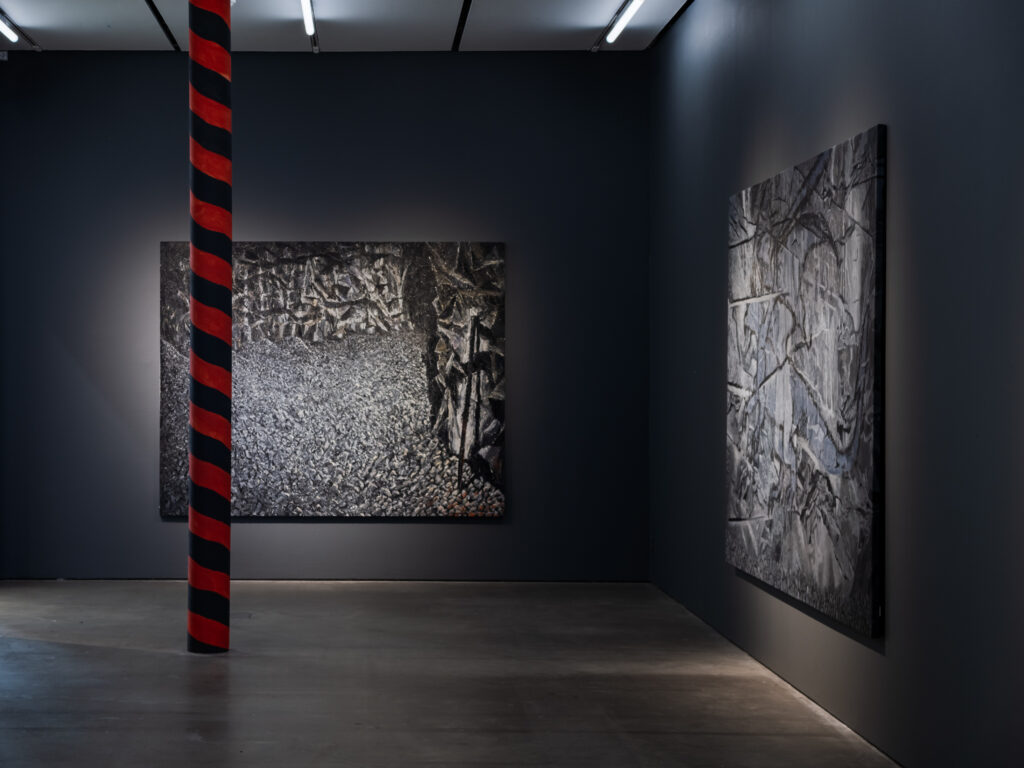
The art gallery’s central exhibition space has been renamed the ‘banquet hall’ by the artists. Here, works by Smeby and Nordlöf Malekian are brought together, works that have something unruly, maximalist or rebellious about them. In both artists’ work, there is a force that can tend towards the wild and untameable, a life-affirming, collective energy that is both dark and bright at the same time. Keeping Up with the Iranians (2022–24) by Nordlöf Malekian is a participatory performance: a large Iranian house party (mehmooni) where fictional larger-than-life characters invite the audience to perform choreographies, while the characters elegantly and humorously weave in stories of exile. Here, documentation of such a performance is shown, filmed by the participants themselves on behalf of Nordlöf Malekian. Paper plates used to serve cake during the party have been transformed into two-dimensional Greek columns decorating the exhibition space. In a maximalist party spirit, this room also invites visitors to play a video game, a new work by Nordlöf Malekian and Edwin Safari. Stripper Sun (2025) is a dance game in which the symbolic characters of the sun and the lion reappear, now in the form of a club scene in Beirut with a sun stripping in front of an audience with lions as well as other animals and creatures. At the end of the hall, another side of the party is visible, also untamed, but darker. In Smeby’s new painting M.E.E II (2025), a powerful bear is trapped inside a snow globe. The shift in perspective is dizzying and slightly hallucinatory. Standing on two legs, the bear takes on a human presence, and the worker seems to have merged with the bear’s power, his reflective clothing left in a pile on the floor. At its side are paintings of other beings and places that have their own dark energy: two empty faces, Green Man 2 and Green Man 4 (both 2024) are reminiscent of humanised stone faces in older cathedrals that were carved in secret, inaccessible spaces by unknown stonemasons.
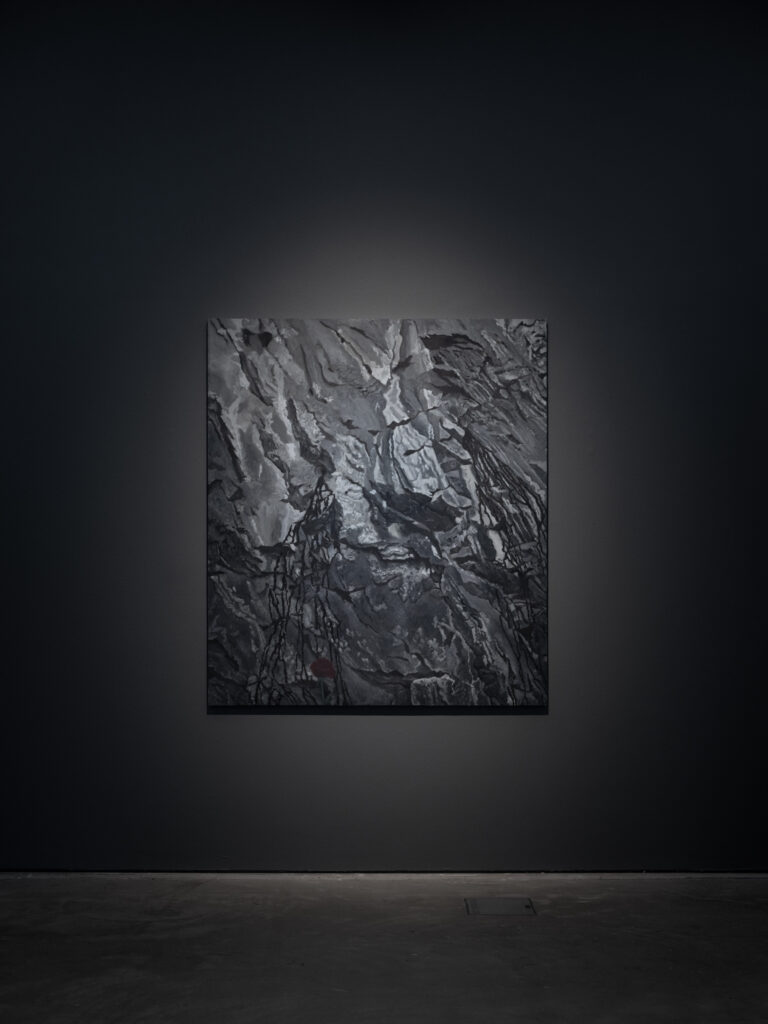
At the beginning of the exhibition, a separate group of paintings by Smeby is presented for the first time. In Azuredragon (2020), CHLRY (2017), Bhexed (2019), and Utan Titel (2017), we delve deeper into the structure of earth and stone. Here, the pigments and form of the paintings recreate the dark surface that has accompanied Smeby throughout his work, a surface that tends towards abstraction and glitters with the soft reflections of light from various minerals. A dragon-like creature appears to have been carved into a surface beneath the earth, like a fossil or cave painting from tens of thousands of years ago. These works explore the nature of stone and earth itself, representing weight and a different perception of time, a unique form of wealth that exists beneath the surface.
Both artists’ search beneath the surface, towards mythical animals and the power of other creatures, points to a place where something moves that cannot be placed within our human hierarchies and systems. Several of the mythical animals that Smeby and Nordlöf Malekian choose to use, symbolise transformation and rebirth, and both of their artistic practices involve a search for freedom. In these artworks, the animal motifs are given power and come to represent something for us, a motion and a boundlessness, something that cannot be completely defined or controlled. A force that can guide and create resistance, or make space for new realities.
Nina Øverli, curator
Read more about the Maria Bonnier Dahlin Foundation here.
Photo: Jean-Baptiste Béranger
Utställning
The Maria Bonnier Dahlin Foundation Grant Recipients 2025